

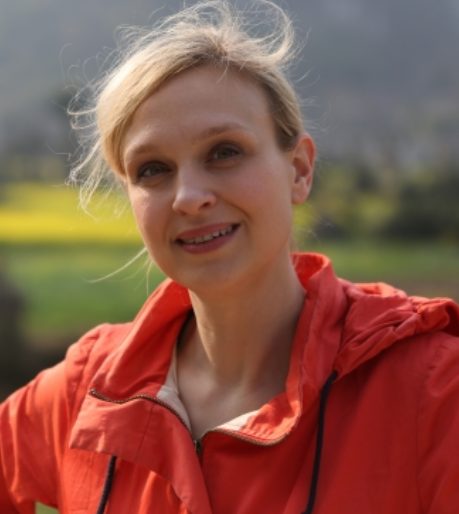
Science Editor for BBC News, Received the Ingenuity Fellowship at the University of New South Wales & Won the Gold Award at the AAAS Kavli Science Journalism Awards for her BBC ‘Newsnight’ Report
Rebecca Morelle’s Biography:
Rebecca Morelle is one of Britain’s most respected science journalists and broadcasters, recognised for making some of the world’s most complex scientific, technological and space exploration stories accessible to global audiences. As Science Editor for BBC News, she leads coverage of major developments across science, space and technology, reporting from the front line of some of the most significant scientific events of modern times. Her ability to combine rigorous journalism with compelling storytelling has made her a trusted voice for audiences worldwide. From reporting on groundbreaking space missions to explaining the implications of climate science and technological innovation, Rebecca brings clarity, authority and enthusiasm to every subject she covers, making her a highly sought-after keynote speaker for organisations looking to inspire audiences with insights into science, innovation and the future.
Rebecca graduated from St Anne’s College, University of Oxford, with a First Class Honours degree in Chemistry, going on to become senior press officer at the Science Media Centre in London. In that role, she helped bridge the gap between researchers and national news organisations, developing a deep understanding of how scientific discoveries can be communicated effectively to the public. Her broadcasting career began when she won the inaugural Ivan Noble Bursary, a highly competitive programme that launched her into the BBC. She went on to become a principal science reporter for the BBC World Service, significantly expanding her international profile before being promoted to Science Editor for BBC News, where she now oversees the corporation’s science, space and technology coverage across its global platforms.
Throughout her career, Rebecca has earned recognition for both the quality and impact of her journalism. She was awarded the prestigious Gold Award at the AAAS Kavli Science Journalism Awards for her BBC ‘Newsnight’ report examining the frameworks of the Paris Climate Conference. She also became the inaugural recipient of the Ingenuity Fellowship at the University of New South Wales, serving as the institution’s first international Journalist in Residence. Her reporting regularly places her at the centre of major scientific stories, including experiencing zero gravity during a European Space Agency parabolic flight alongside the world’s first para astronaut and delivering extensive live coverage from Florida during NASA’s historic Artemis II Moon mission launch.
Why Hire Rebecca Morelle?
Rebecca’s experience provides audiences with a rare perspective on the discoveries and innovations shaping society. Having interviewed leading scientists, explored cutting-edge research and reported from some of the world’s most important scientific events, she offers informed, engaging and thought-provoking insights into leadership, innovation, resilience and the future. Her ability to translate complex ideas into memorable stories ensures audiences leave informed, inspired and better equipped to understand a rapidly changing world.
Rebecca Morelle’s Career Highlights:
Here are some of the key milestones that define Rebecca Morelle’s remarkable career:
- 2026 – Provided extensive, viral live on-the-scene broadcasting from Florida for NASA’s historic Artemis II Moon mission launch
- 2023 – Experienced and reported on zero-gravity conditions during a European Space Agency parabolic flight with the world’s first para-astronaut
- 2021 – Promoted to Science Editor for BBC News, taking charge of the network’s global science, space, and technology coverage
- 2017 – Awarded the inaugural Ingenuity Fellowship by the University of New South Wales (UNSW), serving as their first international Journalist-in-Residence
- 2016 – Won the prestigious Gold Award at the AAAS Kavli Science Journalism Awards for her BBC Newsnight segment detailing the frameworks of the Paris Climate Conference
- 2013 – Expanded her international broadcasting reach by stepping up as a principal science reporter for the BBC World Service
- 2006 – Began her broadcasting career at the BBC after winning the highly competitive, inaugural Ivan Noble Bursary
- 2001 – Appointed as a senior press officer at the Science Media Centre in London, helping bridge the gap between complex research and national newsrooms
- 2001 – Graduated with a First-Class Honours degree in Chemistry from St Anne’s College, University of Oxford
Videos
Rebecca Morelle’s Official Keynote Speaking Videos & Showreel:
Testimonials
“Rebecca Morelle is an outstanding keynote speaker who brings audiences behind the headlines of the world’s most significant scientific discoveries, space missions and technological breakthroughs. Combining award-winning journalism with first-hand experiences at the forefront of global innovation, she delivers engaging, insightful and thought-provoking presentations that leave audiences informed, inspired and excited about the future.” – David Simms
Speaking Topics
Rebecca Morelle‘s Official Keynote Topics:
- Space Exploration
- Climate Change
- Medical ethics
- Volcanology
How Much Does Rebecca Morelle Cost to Hire?
How Much Does it Cost to Hire Rebecca Morelle?
Rebecca Morelle’s speaking fees typically reflect their exceptional career and international demand. Engagements vary depending on location, format, and duration; keynote appearances, conferences, and international events may command higher fees due to travel and preparation requirements.