

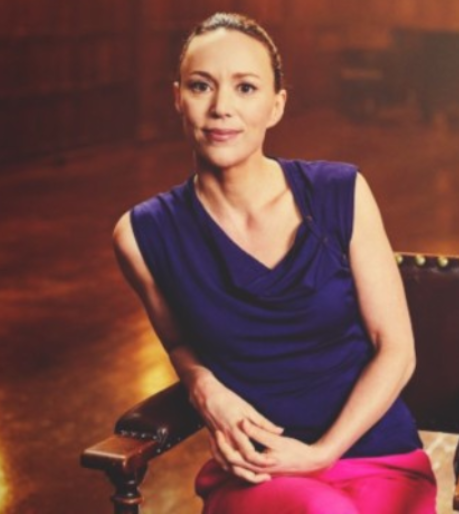
Neuroscience Consultant, BBC Broadcaster, Fellow at Magdalene College, University of Cambridge & Named among the UK’s Top 100 Scientists
Hannah Critchlow‘s Biography:
Hannah Critchlow is an internationally acclaimed neuroscientist, broadcaster and Fellow at Magdalene College, University of Cambridge, renowned for translating cutting-edge brain science into practical insights for organisations and public audiences. As a keynote speaker, Hannah explores neuroscience, artificial intelligence, decision-making, collective intelligence and the future of human thinking, helping audiences understand how the brain shapes leadership, innovation and performance. Alongside her academic career, she advises businesses as a neuroscience consultant, facilitating scientific discussions, supporting science communication and judging prestigious science book and film prizes. Her engaging style and ability to make complex research accessible have established her as one of Britain’s leading science communicators.
After studying neuroscience at the University of Cambridge, Hannah completed a PhD investigating dendritic spine plasticity in schizophrenia, earning a Research Fellowship at Magdalene College. During the early stages of her career, she worked on neuroscience policy and public engagement through roles at the University of Oxford, Cambridge Neuroscience and the British Neuroscience Association, where she successfully campaigned for increased neuroscience funding and organised major scientific conferences. She later expanded into broadcasting, producing and presenting neuroscience content for The Naked Scientists before becoming a familiar face across BBC television and radio. Today, she continues as a Science Outreach Fellow at Magdalene College while combining research with consultancy, broadcasting and international keynote speaking.
Hannah has authored four acclaimed popular science books, including ‘Consciousness: A Ladybird Expert Guide’, ‘The Science of Fate’, ‘Joined Up Thinking’ and ‘The 21st Century Brain: How to Future-Proof Your Mind in the Age of AI’, with multiple titles becoming Sunday Times bestsellers and receiving international recognition. Her books have been translated into numerous languages and praised by leading scientists, authors and broadcasters. She has appeared across BBC, ABC and international media, while her achievements have earned an Honorary Doctorate from Brunel University, election to the European Dana Alliance for the Brain, recognition as one of Nature’s Cambridge Rising Stars, inclusion among the UK’s Top 100 Scientists and she is due to receive the 2026 Rosalind Franklin Medal from the Humanist Society.
Throughout her career, Hannah has remained committed to improving public understanding of neuroscience and its practical applications. Whether discussing leadership, teamwork, resilience, ethics or the relationship between AI and the human brain, she combines rigorous scientific evidence with engaging storytelling. Her work continues to influence business leaders, policymakers, educators and researchers, making her one of the most respected voices exploring how neuroscience can shape the future of society.
Why Hire Hannah Critchlow?
Hannah Critchlow is hired as a speaker for her rare ability to translate complex neuroscience into practical strategies for organisations navigating leadership, innovation and artificial intelligence. Drawing on decades of research and extensive consultancy experience, she delivers evidence-based insights that audiences can immediately apply. Hannah has presented internationally, delivered the Institute of Managers and Leaders’ Neuroscience Impact Series across Australia, and regularly appears on major BBC programmes including Family Brain Games, Tomorrow’s World Live, Start the Week and The Life Scientific, making her an engaging and authoritative keynote speaker.
Hannah Critchlow‘s Career Highlights:
Here are some of the key milestones that define Hannah Critchlow’s remarkable career:
- 2026 – ‘The 21st Century Brain: How to Future-Proof Your Mind in the Age of AI’ was recognised as a Sunday Times bestseller and selected as one of New Scientist’s Best Books of 2026
- 2022 – Published ‘Joined Up Thinking’ and received an Honorary Doctorate from Brunel University for her contribution to science communication.
- 2019 – ‘The Science of Fate’ became a Sunday Times bestseller and was recognised by Nature as one of the University of Cambridge’s Rising Stars in Life Sciences.
- 2019 – Presented the BBC Two series Family Brain Games with Dara Ó Briain and the BBC Radio 4 documentary Destiny and the Brain.
- 2018 – Published ‘Consciousness: A Ladybird Expert Guide’ and served as a judge for the prestigious Wellcome Trust Science Book Prize.
- 2017 – Became Science Outreach Fellow and Fellow Commoner at Magdalene College, University of Cambridge, expanding her public engagement and research activities.
- 2014 – Named one of the UK’s Top 100 Scientists by the UK Science Council and recognised as one of the University of Cambridge’s most inspirational women in science.
- 2008 – Awarded a PhD in Neuroscience from the University of Cambridge, with research into schizophrenia leading to a Research Fellowship at Magdalene College.
Videos
Hannah Critchlow’s Official Keynote Speaking Videos & Showreel:
Testimonials
“Hannah is a top professional – diligent and easy to work with. Hannah has the ability to simplify complex neuroscience into content that is easily digestible. She delivered a fantastic session full of knowledge and practical ideas for leaders to take away and use immediately.” – Brendan Barns, Founder London Business Forum
“We’ve worked with Hannah for 4 years….she has an exceptional ability to communicate complicated ideas about science and technology in a way that speaks to the general public and to schools audiences. She’s lectured about developments in neuroscience at Hay several times to audiences of 1,000 and 1,750. It’s a scale that’s challenging for most teachers. She works the space like a rockstar. Each time she has had the highest possible response rating from the audiences, both from students and from professional adults.” – Peter Florence, Director of the Hay Festival
“Hannah was one of our favourite ever speakers at 5×15- she’s dynamic, and an incredible communicator of complex and profound ideas. She wowed our audience in Hackney with her laughing rats and astounding insights into the human brain- we can’t wait for her to come back to join us again.” – Daisy Leitch: Director of 5 x 15
“Hannah has been a leading presenter at the Cambridge Science Festival for many years, and thousands of people from schools and family audiences have really enjoyed her interactive demonstration lectures. Hannah’s clear and lively communication style has brought the subject of neuroscience alive and her popular talks have received great feedback. Hannah also carried out a number of thoughtful and targeted public engagement activities with community groups including Squeaky Gate, a charity empowering people including those with mental health issues through arts and music.” – Nicky Buckley, Former Head of Public Engagement, University of Cambridge
“The human brain is one of those subjects of such forbidding complexity that anything less than a clear, engaging, approachable and intelligent talk would leave an audience staring blankly at an imponderable galaxy of neurons and synapses. Hannah Critchlow’s lecture, to several hundred A-level Biology students, more than exceeded these testing requirements. She has the rare and important quality of being able to distil even the most recondite ideas for an audience beyond the laboratory and in doing so reminding a young audience that scientific inquiry is for anyone who is curious. It’s particularly exhilarating to see a group of students being guided expertly through the great leaps in understanding made in neuroscience, to learn about the truly wondrous advances still to be made and perhaps to wonder if they could be the ones who will be making the discoveries of the future.” – Dan Powell, Director of A’Level Science Live
“Hannah gave a talk at the How To Academy’s annual Conference on How To Change the World and she was absolutely fabulous. It was a totally inspiring talk that had the audience completely rapt. She is the most brilliant communicator of science.” – John Gordon, Director of the How to Change the World Academy
“Hannah Critchlow is the most brilliantly engaging speaker. She wowed a Shambala crowd of 200 at the festival in 2018, and we couldn’t wait to have her back this year. One of our absolute highlights of last year.”– Sophie Chatz, Shambala Festival programmer
Speaking Topics
Hannah Critchlow’s Official Keynote Topics:
- Media & Journalism
- Neuroscience
How Much Does Hannah Critchlow Cost to Hire?
How Much Does it Cost to Hire Hannah Critchlow?
Hannah Critchlow’s speaking fees typically reflect her exceptional career and international demand. Engagements vary depending on location, format, and duration; keynote appearances, conferences, and international events may command higher fees due to travel and preparation requirements.