

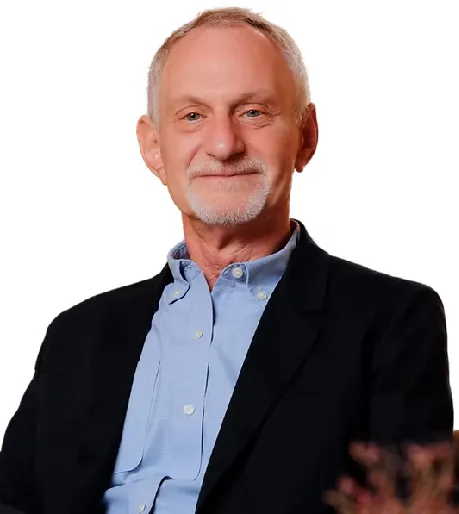
Director of The Harvard Study of Adult Development, One of The Most Viewed TED Speaker, Professor at Harvard Medical School & Founder of The Lifespan Research Foundation
Robert Waldinger’s Biography:
Robert Waldinger is a psychiatrist, professor and internationally recognised expert on the science of happiness, best known as the Director of the Harvard Study of Adult Development, one of the longest-running studies on human wellbeing ever conducted. As a Professor of Psychiatry at Harvard Medical School, he combines academic research, clinical practice and public education to help audiences understand what truly drives long-term fulfilment. His work bridges psychology, relationships research and mindfulness, drawing on both scientific evidence and his experience as a Zen teacher.
Robert has led the Harvard Study of Adult Development since 2005, continuing research that began in 1938 and has followed multiple generations across decades of life. Under his leadership, the study expanded to include the children of the original participants, deepening understanding of how relationships, health and social connection shape wellbeing over time. Through this research, he has helped bring complex scientific findings into accessible public conversation.
His global profile grew significantly following his 2015 TED Talk, ‘What Makes a Good Life? Lessons from the Longest Study on Happiness‘, which became one of the most viewed TED Talks of all time. The talk introduced millions to the study’s central finding that strong relationships are the greatest predictor of health and happiness. His thoughtful, clear communication style has made him a leading voice in conversations around mental health, meaning and social connection.
Alongside his academic work, Robert is the founder and Executive Director of the Lifespan Research Foundation, which helps translate research into practical tools for everyday life. He co-authored the bestselling book ‘The Good Life’, bringing decades of findings to a broader audience. His unique perspective, shaped by his work as both a psychiatrist and Zen priest, enables him to blend scientific rigour with human insight.
Why Hire Robert Waldinger?
Robert is hired as a speaker for his rare ability to translate decades of scientific research into clear, practical guidance for leadership, wellbeing and human connection. His TED Talk is one of the most recieved of all time with over 27 million views, demonstrating his ability to communicate complex ideas in a way that resonates globally.
He brings a calm, insightful presence to the stage, combining hard data with compassion and wisdom drawn from clinical practice and Zen teaching. Audiences leave with actionable insights on relationship-building, resilience and creating meaningful lives, making his talks especially valuable for organisations focused on wellbeing, leadership development and culture.
Robert Waldinger’s Career Highlights:
Here are some of the key milestones that define Robert Waldinger’s remarkable career:
- 2025 – Continued global dissemination of The Good Life, bringing insights from the Harvard Study of Adult Development to wider audiences through international speaking and educational programmes.
- 2015 – Delivered the TED Talk What Makes a Good Life? Lessons from the Longest Study on Happiness, which became one of the most viewed TED Talks of all time and introduced millions to the science of long-term wellbeing.
- 2013 – Appointed Professor of Psychiatry at Harvard Medical School, combining teaching, clinical practice and research into adult development and happiness.
- 2010 – Became Director of the Harvard Study of Adult Development at Massachusetts General Hospital, leading one of the world’s longest-running studies on human wellbeing and expanding it to include multi-generational research.
- 2005 – Took leadership responsibility for continuing and developing the Harvard Study of Adult Development, guiding its modern direction and global impact.
- 1978 – Completed his Doctor of Medicine (M.D.) at Harvard Medical School, laying the foundation for a career in psychiatry and longitudinal research.
- 1973 – Studied Philosophy at Christ’s College, University of Cambridge, shaping his early interest in meaning, ethics and human flourishing.
Videos
Robert Waldinger’s Official Keynote Speaking Videos & Showreel:
Testimonials
“Robert is an exceptional speaker for organisations seeking evidence-based insight into wellbeing, leadership and human connection. His authority as director of a landmark longitudinal study, combined with his calm and engaging delivery, makes his talks both intellectually rigorous and deeply personal. He leaves audiences informed, inspired and equipped with practical tools for building better lives and stronger cultures.” – David Simms
Speaking Topics
Robert Waldinger’s Official Keynote Topics:
- What Makes a Good Life? Lessons From the Longest Study on Happiness
- Why Relationships in the Workplace Matter More Than You Think – And How to Embrace Them
- Dealing With Change – Life Transitions & Preparing for the Inevitable
- The Best Things in Life Aren’t Things – What Really Makes Us Happy
How Much Does Robert Waldinger Cost to Hire?
How Much Does it Cost to Hire Robert Waldinger?
The cost of hiring Robert Waldinger depends on your event format, location, duration and any travel requirements. For an accurate and tailored quote, please contact a London Keynote Speakers Agency booking agent for expert guidance.