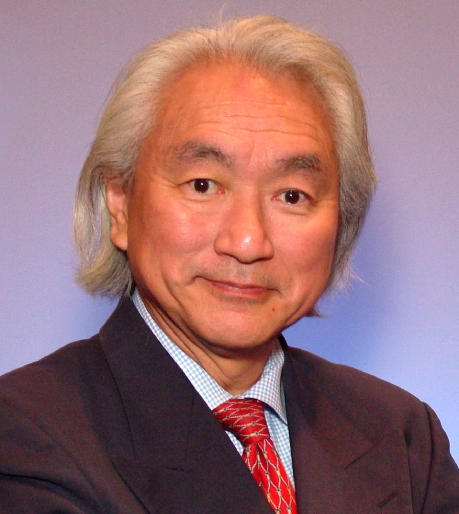
Futurist, Professor of Physics at the City College of New York, Bestselling Author & Co-Creator of String Field Theory
Michio Kaku’s Biography:
Michio Kaku is an internationally renowned futurist, theoretical physicist and science communicator, recognised as one of the world’s leading voices on the future of science, technology and humanity. Named by Academic Influence as “one of the most influential physicists in the world today”, he is celebrated for co-creating string field theory and advancing research connected to Einstein’s Theory of Everything. A Henry Semat Chair and Professor at the City College of New York for 25 years, Michio combines world-class scientific expertise with an exceptional ability to explain complex ideas to global audiences, making him one of the most sought-after keynote speakers on innovation, artificial intelligence and futurism.
Michio’s academic career has been defined by pioneering research and distinguished teaching. Alongside his long tenure at the City College of New York, he has served as a visiting professor at New York University and the Institute for Advanced Study at Princeton. Throughout his research career, he has published more than 70 scholarly articles spanning supersymmetry, hadronic physics and string theory. His work has helped shape modern theoretical physics while inspiring generations of scientists, students and business leaders interested in understanding the technologies that will define the future.
Alongside his academic achievements, Michio is a bestselling author whose books have introduced millions of readers to advanced scientific concepts. His 1994 book ‘Hyperspace’ was recognised as one of The Washington Post’s Best Science Books of the Year, while he has since achieved eight New York Times bestsellers, including ‘Beyond Einstein’ and ‘The Future of Humanity’. In 2021, he received the Sir Arthur Clarke Lifetime Achievement Award in recognition of his outstanding contribution to science communication and technological thought leadership.
Beyond academia, Michio has become one of the world’s most recognisable scientific broadcasters. He has hosted a weekly radio programme, presented the BBC series Time and Visions of the Future, and fronted numerous science specials for the Discovery Channel, Science Channel and BBC. His appearances on programmes including Good Morning America, The Today Show, The Late Show with Stephen Colbert, CNN, PBS, National Geographic and HBO have established him as a trusted commentator on the future of science, ensuring his keynote presentations are both intellectually rigorous and highly engaging.
Why Hire Michio Kaku?
Michio delivers captivating keynote presentations that translate cutting-edge physics into practical insights about the future of technology, business and society. Drawing on decades of scientific research and global media experience, he explains emerging trends in artificial intelligence, quantum computing, space exploration and innovation with exceptional clarity. Having presented major television series for the BBC and hosted numerous internationally broadcast science programmes, he combines academic authority with engaging storytelling, leaving audiences inspired to think differently about the opportunities and challenges shaping tomorrow.
Michio Kaku’s Career Highlights:
Here are some of the key milestones that define Michio Kaku’s remarkable career:
- 2021 – Received the Sir Arthur Clarke Lifetime Achievement Award for his outstanding contribution to science and science communication.
- 2021 – Recognised by Academic Influence as one of the world’s most influential physicists.
- 2018 – Achieved New York Times Best Seller status with ‘The Future of Humanity’.
- 2008 – Presented the BBC television series Visions of the Future.
- 2000s – Hosted numerous science specials for the Discovery Channel, Science Channel and BBC-TV while becoming a regular commentator across major international media.
- 1994 – ‘Hyperspace’ was named one of The Washington Post’s Best Science Books of the Year.
- 1990s – Served as Henry Semat Chair and Professor at the City College of New York, a position he held for 25 years.
- Co-created string field theory and made significant contributions towards research expanding Einstein’s Theory of Everything.
Videos
Michio Kaku’s Official Keynote Speaking Videos & Showreel:
Testimonials
“Michio Kaku delivered a truly unforgettable keynote that challenged the way our audience thinks about the future. His rare ability to simplify the most complex scientific concepts into engaging, practical insights left every delegate inspired and energised. Combining world-class expertise with remarkable charisma, he captivated the room from start to finish, making emerging technologies feel both accessible and exciting. It was an exceptional presentation that sparked meaningful conversations long after the event had ended.” – David Simms
Speaking Topics
Michio Kaku’s Official Keynote Topics:
- Futurism
- Science
- Theoretical Physics
How Much Does Michio Kaku Cost to Hire?
How Much Does it Cost to Hire Michio Kaku?
Michio Kaku’s speaking fees typically reflect their exceptional career and international demand. Engagements vary depending on location, format, and duration; keynote appearances, conferences, and international events may command higher fees due to travel and preparation requirements.